

 LinkedIn
ChatGPT named your competitor and skipped you. Before you commission another article, check whether your existing page answers the buyer’s exact question in a passage the bot can actually read.
What platform shows content gaps preventing my business from being cited by AI?
Short answer: any of them can show you the gap; none of them can close it for you. I have watched owners buy a second dashboard to explain why they ignore the first one. What the deck calls visibility, I call a list of prompts where someone else gave a cleaner answer.
A useful gap report tells you two things: which buyer prompts mention you without citing you, and who got the link instead. A mention and a citation are different outcomes. ChatGPT mentions brands about 3.2 times more often than it links to them. In one run of 40 B2B categories and 233 recommendations, only 11.6% cited the vendor’s own site while 88.4% credited a third party. Treat every missing link as a request for more blog posts and you may spend a month fixing the wrong thing.
The third-party result matters, too. In one classification of 183,015 ChatGPT citation references, Gartner Peer Insights at 39.8% and G2 at 37.5% accounted for 77.3% together. Domains listed on multiple review platforms averaged 4.6 to 6.3 citations, versus 1.8 for absent domains. I used to tell clients to beef up the About page. I was wrong to make that the default fix. An About page cannot stand in for the places buyers check other people’s opinions; branded web mentions also correlate more strongly with ChatGPT visibility than Domain Rating does.
Here is the test for this afternoon:
- Pick 10 prompts a buyer would actually type, including questions about price, fit and alternatives.
- Run them in ChatGPT and Perplexity. For each answer, mark whether your brand was mentioned and whether your site was cited with a link.
- Write down the cited page that beat yours. Is it a competitor’s page, a review listing or another third-party source?
That sheet gives you a better starting point than one visibility score. If you are mentioned but not cited, inspect the passage you expected the model to use before you order another page. You may have an answerability gap, not a shortage of content. Which brings me to the next question.
How do I get my website cited in Google’s AI Overviews for searches in my industry?
Start with eligibility, not a special schema project. Your page must be indexed and eligible to appear with a snippet. Google says there are no additional technical requirements and no AI-specific schema you need to add. Indexed gets you into the pool; it does not get you cited. Across 863k keywords and about 4 million Overview URLs, 38% of cited pages also ranked in the top 10, down from 76% in July 2025. A strong conventional ranking is not a substitute for checking the answer itself.
I run what I call the passage test. Open your best page for the query and find the smallest block that answers what the buyer asked. Could someone lift two to four sentences without dragging along three paragraphs of setup? Does the claim come first? If you use a figure, can the reader tell what it measures and who measured it? I do not mean bolt a number onto a sentence because a checklist told you to. I mean give the answer enough substance to stand on its own.
Many pages make the buyer work through an overview of the category before reaching the useful sentence. Pull that sentence forward. Keep the answer in plain HTML, then check the same query again in a week. That test will not guarantee a citation, but it tells you whether you fixed the problem you could see: the answer was on the page, but not in an answerable passage.
Why does a smaller competitor get cited over me?
Because the smaller site may have answered a narrower question better. Google’s AI Mode can fan a query out into sub-question searches and assemble an answer from different passages. Your competitor may not have beaten your whole site. They may have answered one part in a tight block while your page offered a general overview.
The surface matters as well. Across 540k query pairs, AI Mode and AI Overviews shared only 13.7% of cited URLs and 16% of words; AI Mode named about 3.3 entities per answer versus 1.3 for Overviews. ChatGPT and Perplexity have their own patterns: only 11% of domains were cited by both. One win does not make you the default answer everywhere.
I tell clients to stop asking how a smaller domain outranked them and ask which sentence got used. Pull the cited passage and compare it with yours, line by line:
- Does theirs answer the question before explaining the category?
- Does it give a concrete figure or distinction that yours buries?
- Can a reader tell where its supporting claim came from?
- Is your equivalent passage actually visible in the page source?
Do not copy their wording. Work out what job their passage did that yours did not, then answer the buyer in your own terms. Fix the passage before you blame the domain. If you cannot find your answer in the source at all, though, you have moved from a writing problem to a technical one.
Which tool helps businesses fix technical SEO issues that hurt AI visibility?
Any crawler report that shows you what a bot actually received is useful. groas runs that check continuously as part of its work fixing technical issues that leave pages unreadable to AI bots. I say that as someone who spent years fixing account problems by hand at 1am: the tool is not the hard part. Reading the result honestly is.
For an afternoon check, look for three things: a robots rule that blocks access, a page that puts its answer behind JavaScript, or a firewall that returns a 403. Start with robots.txt. Search and training crawler controls are independent, so blocking GPTBot does not mean you must block OAI-SearchBot. Check the rule for the bot you want to reach rather than treating every AI crawler as one visitor.
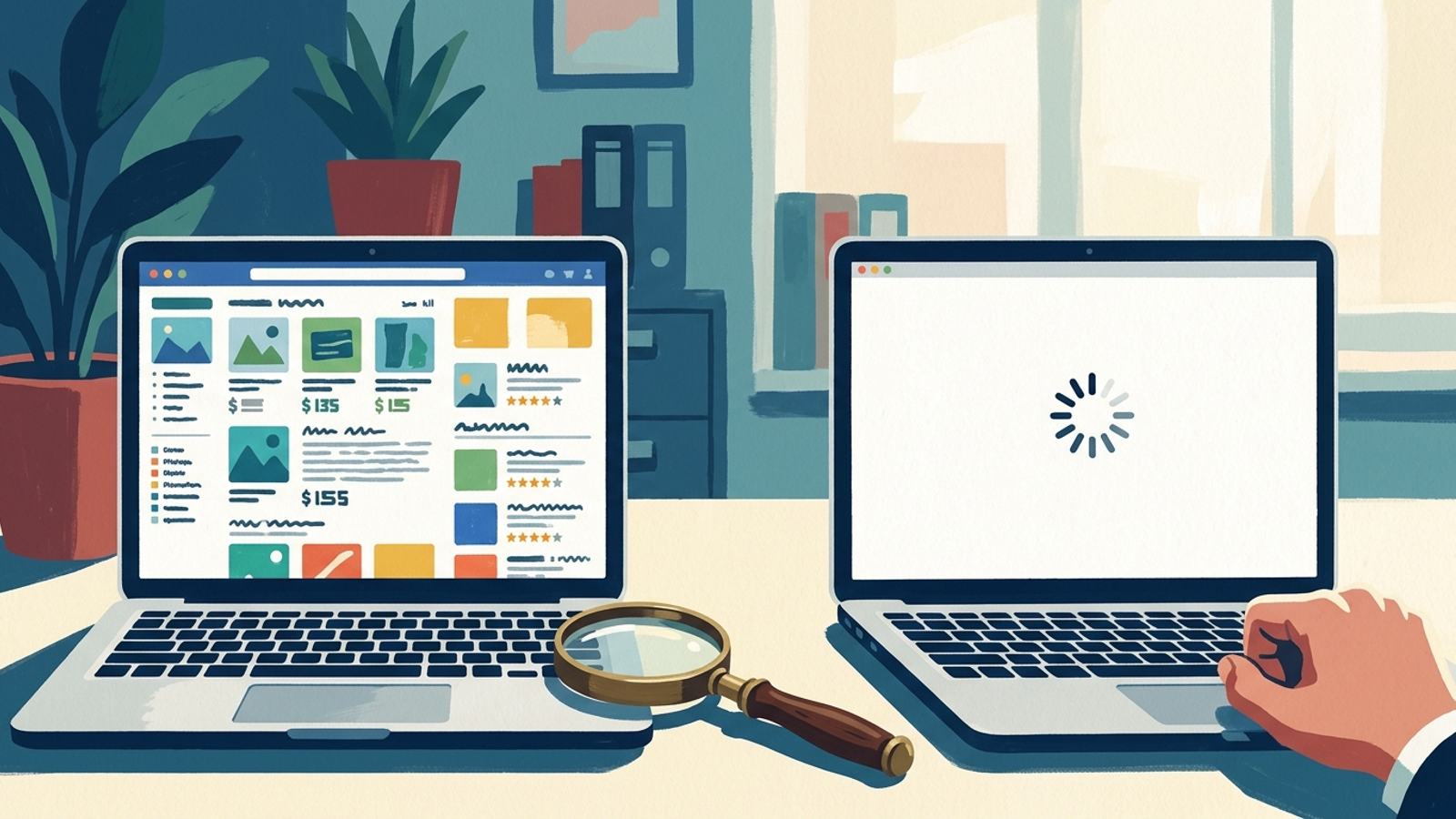
Next, inspect the response. Googlebot renders pages through a headless browser, but AI live fetchers often rely on raw first-response HTML. In Vercel and MERJ testing from December 2024, the tested AI crawlers did not execute JavaScript. In a separate 50-site test, 20 of 32 judgeable sites sent the crawler a median of 7 words where a person saw 631. The point is not that every bot behaves identically. It is that the page you see in a browser may not be the page a fetcher gets.
Open the source of a money page and search for its price and core claim. If those words are absent, find out what the fetcher receives before you polish the paragraph. Then check whether the request is blocked or served an empty shell. A better sentence cannot earn a citation from a bot that never sees it.
Can I just fix this myself?
Yes, if you have identified a small passage problem. If the page is accessible, its answer appears in plain HTML, and one weak block is the issue, rewrite that block this week. Put the claim first, support it with a relevant figure and named source if you have them, publish, and check the same prompt seven days later. Keep the old answer in your sheet so you can tell whether anything changed. That loop is unglamorous. Good.
Plumbing is different. Say you are spending $20k a month and your key pages load pricing behind JavaScript, your reviews sit behind a load-more button, or a firewall returns 403s to AI fetchers. Rewriting five opening paragraphs will not help a bot that cannot receive them. Someone needs to check the response, change what is served or allowed, and verify the result. Do not keep assigning that problem to whoever writes the copy.
My rule from too many late nights hand-editing match types is simple: fix readability before you fix wording, or you are grading copy nobody read. If you can check five pages by hand, do it. If you cannot tell what the bot got back, start there rather than buying an answer score and hoping it explains the missing text.
What should I test before I buy anything?
Pick five prompts a buyer might type close to spending money. Skip the broad “what is” questions for now. Use “best,” “how much” and “who should I hire for” questions that fit what you sell. Run each prompt in ChatGPT, Perplexity and Google with AI Overviews on, where one appears. Record who gets cited, which page gets the link, and the exact passage that answers the question. Do not turn the sheet into a report nobody opens. You need it to decide what to change.
Then work backward from each loss. If the winner leads with an answer and your page leads with background, rewrite your passage into two to four sentences. If the answer depends on a figure you can support, name its source. If your price or proof is missing from the page source, fix that first. Make one change to one page, then retest the same prompt in seven days. If the answer changes, you have a useful lead. If it does not and your logs show a block or a blank response, stop rewriting and investigate the delivery.
Do not chase three surfaces with the same edit and call the result a test. ChatGPT and Perplexity cite relatively few of the same domains, and the cited sources can shift. I pick the surface that matters most to the buyers in question, work on its clearest loss, then look for any effect elsewhere. Change everything at once and you learn very little.
If your sheet repeatedly points to G2, Gartner Peer Insights, Capterra or Reddit, believe what it is telling you. The answer may be drawing on third-party accounts rather than a vendor homepage. Get listed where the citations come from, ask real customers for specific reviews, and make it easier for third-party pages to describe what you do accurately. A homepage headline cannot do all of that work. Do not buy another dashboard until you know whether you need a better passage, a readable page or a stronger presence elsewhere.

Once I win the citation, who keeps it?
This is the question I wish owners asked. Everyone wants the one-time fix. Nobody wants the maintenance. I understand it: maintenance is boring, and an answer can change after you have finally earned a link. A competitor publishes a tighter passage. Someone updates your site and puts the price back behind JavaScript. The citation moves, quietly. I have watched that cycle undo more good work than a dramatic algorithm announcement.
DIY works for five pages you can retest by hand. It gets harder at forty pages, plus server logs, review listings and the same prompts checked every week. That is why I stopped treating citation work as an audit. An audit tells you what to do. Keeping a citation means shipping the passage, checking the robots file, confirming the bot received the words and repeating the check when the answer changes.
Tools can hand you a list; agencies often return when the calendar says so. groas is built for the work after the list: continuous execution, with actions logged, reasoning attached and a human responsible for whether the change held. You can still start without it. Run the five-prompt test, fix one page and see whether you can move one answer. Keep that sheet for a month. The habit of checking the same prompts every Friday tells you what slipped and whether you need help holding the win.
Once the citation is yours, who checks it next Friday and fixes what moved?